

If you are searching for property for sale in Portugal, the biggest decision is not simply which home looks best online. You must choose a location that suits the way you intend to use the property, understand the taxes that apply to your status and arrange independent legal checks before paying a substantial deposit.
This guide explains the main buying regions, the 2026 tax position, the documents your lawyer should inspect and the usual journey from finding a property to receiving the keys.
Key Takeaways
- Foreign nationals can generally buy residential property in Portugal; buying a home does not, by itself, give the owner the right to live in Portugal.
- The Algarve remains the established holiday-home market, while the Silver Coast and parts of Central and Northern Portugal can offer more space for the budget.
- Portugal introduced an important 2026 IMT rule under which many non-resident purchases of residential property are taxed at 7.5%, subject to statutory exceptions and refund provisions.
- Buyers should also budget for 0.8% stamp duty, legal and registration costs, surveys, mortgage expenses where applicable and annual municipal property tax.
- An independent Portuguese lawyer should verify ownership, debts, planning permission, licences, boundaries and any condominium liabilities before the buyer becomes committed.
- Short-term holiday letting is regulated locally. Never assume that an attractive tourist property can automatically obtain or retain an Alojamento Local licence.
The Portugal Property Market in 2026
International demand continues to be supported by Portugal’s climate, coastline, accessibility, established expat communities and reputation as a comfortable place to own a second home or relocate. However, Portugal is not one uniform market. Statistics Portugal reported a national median transaction price of €2,337 per square metre for the 35,953 family dwellings sold in the first quarter of 2026, while also highlighting substantial differences between locations.
Prime parts of Lisbon, Cascais and the central Algarve can command substantial premiums. The Silver Coast, Central Portugal and selected northern districts may provide better value, although resale demand and year-round rental activity can vary considerably from one town to another.
Buyers should therefore separate three objectives:
- Lifestyle: Is the property intended mainly for personal holidays, retirement or permanent relocation?
- Income: Will it be offered for long-term rental or short-term holiday accommodation?
- Investment: Is the priority future resale demand, capital preservation or renovation-led growth?
A location that works brilliantly for summer holidays may not deliver the strongest year-round tenancy. Equally, a quieter inland home may provide excellent personal value but take longer to resell.
Best Places to Buy Property in Portugal
The Algarve: Established Holiday-Home Demand
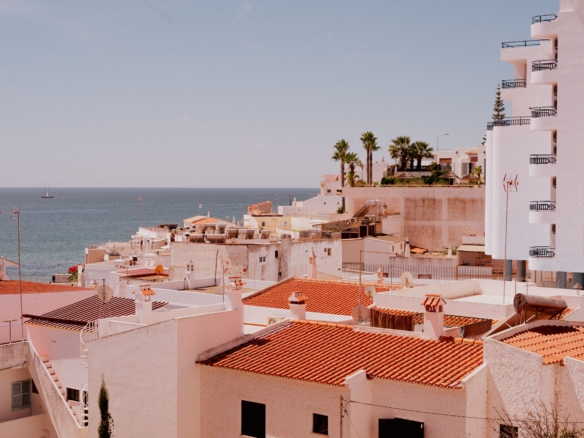
The Algarve is the classic choice for international buyers. Lagos, Albufeira, Vilamoura, Tavira, Carvoeiro and surrounding communities offer beaches, golf, marinas and access through Faro Airport.
The central and western Algarve generally attract buyers seeking resorts, villas and holiday-rental potential. The eastern Algarve often appeals to those wanting a quieter and more traditionally Portuguese environment.
Pros:
- Strong international recognition and a mature resale market
- Good access through Faro Airport
- Wide choice of apartments, villas, golf properties and new developments
- Established services for overseas owners
Cons:
- Premium prices in the best-known coastal areas
- Seasonal demand in some resorts
- Competition between holiday rentals
- Higher maintenance costs for pools, gardens and homes exposed to sea air
Lisbon, Cascais and Estoril: City Access and Premium Coastal Living
Lisbon combines employment, culture, transport and year-round housing demand. Cascais and Estoril add beaches, international schools and a high-end coastal lifestyle within reach of the capital.
These areas may suit buyers prioritising liquidity and year-round appeal, but entry costs can be considerably higher than in less established regions. Apartment buyers should pay close attention to condominium records, planned building works and restrictions on short-term letting.
Pros:
- Year-round demand and strong international profile
- Access to business, education, healthcare and transport
- Broad appeal to residents, professionals and international buyers
Cons:
- High purchase prices in prime neighbourhoods
- Older buildings may require significant communal works
- Parking and outside space can be limited
- Local accommodation rules may restrict holiday-rental plans
The Silver Coast: Coastal Lifestyle and Relative Value
The Silver Coast includes destinations such as Nazaré, Peniche, São Martinho do Porto, Caldas da Rainha and the Óbidos area. It attracts buyers who want Atlantic beaches and access to Lisbon without paying central Algarve or Cascais prices.
The coast is cooler and less resort-driven than the Algarve. That difference appeals to many permanent residents, surfers and lifestyle buyers, but anyone relying on rental income should study demand street by street and across the full year.
Pros:
- Coastal homes can offer better value than Portugal’s most famous southern resorts
- Accessible from Lisbon
- Attractive for lifestyle moves and longer stays
- Mix of established towns, beach communities and countryside
Cons:
- Cooler, windier and wetter than the Algarve
- Rental performance varies significantly by town and season
- Some properties may have damp, insulation or coastal-exposure issues
Porto and Northern Portugal: Character and Year-Round City Demand
Porto offers historic neighbourhoods, universities, tourism and a substantial local economy. Nearby Vila Nova de Gaia and northern cities such as Braga can provide alternatives for buyers who value city life and year-round activity.
Renovation properties require particularly careful due diligence. A low asking price can conceal structural work, heritage restrictions, tenant rights or licensing challenges.
Pros:
- Strong cultural identity and year-round city activity
- International airport access
- Wider range of price points outside prime central districts
Cons:
- Wetter climate than southern Portugal
- Renovation costs can be difficult to estimate
- Local planning and letting rules must be checked carefully
Central Portugal and the Alentejo: Space, Privacy and Rural Value
Central Portugal and the Alentejo appeal to buyers looking for land, privacy, village homes, farms and renovation opportunities. Purchase prices can appear attractive compared with coastal hotspots, but access, utilities, wildfire exposure and resale times require serious consideration.
For rural property, your lawyer and surveyor should confirm that the registered boundaries correspond with the land being shown, that buildings are legally recorded and that water, drainage and access rights are secure.
Pros:
- More land and living space for the budget
- Quiet lifestyle and distinctive landscapes
- Opportunities for restoration and rural tourism projects
Cons:
- A car may be essential
- Properties can take longer to resell
- Heating, insulation, wells, septic tanks and wildfire protection need inspection
- Unlicensed extensions or incorrectly registered land can create difficulties
Madeira and the Azores: Island Living
Madeira offers a mild climate, dramatic scenery and an established international market, particularly around Funchal and the south coast. The Azores offer a greener, quieter Atlantic lifestyle and a smaller property market.
Island buyers should consider microclimates, slope stability, access, freight costs, flight connections and the availability of tradespeople. Tax thresholds and rules can also differ from mainland Portugal, so local professional advice is essential.
Can Foreigners Buy Property in Portugal?
Foreign buyers can generally purchase houses, apartments and land in Portugal without needing a Portuguese partner. The purchase is separate from immigration status: ownership does not automatically grant residency, citizenship or an unrestricted right to remain in the country.
Most buyers will need a Portuguese tax identification number, known as a NIF, before completing the transaction. Portugal’s official government portal explains who can apply for a NIF and how to request one. Depending on their circumstances, non-residents may also need appropriate tax representation or electronic notification arrangements. A Portuguese bank account is often useful for paying utilities and taxes, although buyers should ask their lawyer and bank what is required in their particular case.
Buyers planning to relocate should take separate advice on visas, tax residence, healthcare and the amount of time they may legally spend in Portugal.
Portugal Property Taxes and Buying Costs in 2026
The asking price is only part of the acquisition budget. The precise amount depends on the property’s value, intended use, location, buyer status and whether borrowing is involved.
IMT Property Transfer Tax
IMT is charged on the higher of the declared purchase price and the property’s taxable value, using the rules applicable to the transaction.
An important change was introduced in 2026. Under Article 17 of Portugal’s official IMT Code, the purchase of urban residential property by a non-resident is generally subject to a 7.5% IMT rate, unless a statutory exception applies. The legislation includes provisions for buyers who become Portuguese tax residents within two years and for qualifying affordable residential lettings, including a process for reclaiming the relevant difference where the legal conditions are satisfied.
Because tax residence, timing and intended use can materially alter the outcome, buyers should obtain a written calculation from a Portuguese lawyer or tax adviser before signing a reservation or promissory contract.
Stamp Duty
Stamp duty on the property transaction is generally 0.8%, as set out in the Portuguese Government’s guidance on buying and selling real estate. If the purchase is financed, additional stamp duty may apply to the credit, alongside bank valuation, arrangement and registration costs.
Legal, Notary and Registration Costs
Allow for independent legal fees and the cost of completing and registering the transaction. Charges vary according to complexity, property value, financing and the professional appointed. Ask for a written quotation that explains what is included, particularly searches, powers of attorney, tax representation and post-completion registration.
Annual IMI Municipal Property Tax
Owners normally pay annual municipal property tax, known as IMI. It is based on the property’s official taxable value rather than simply the purchase price, and the applicable rate is set within the legal framework by the municipality. The government provides current information about IMI payment dates and possible exemptions. Higher-value holdings may also be exposed to AIMI, so buyers acquiring expensive property or multiple Portuguese properties should seek tax advice.
A Sensible Contingency
Do not use every available euro for the purchase price. Keep a separate allowance for taxes, professional fees, currency movements, repairs, insurance, furnishings and initial running costs. Older and rural homes deserve a larger contingency than a recently completed apartment with clear warranties.
The 6-Step Process for Buying Property in Portugal
1. Define the Purpose and Full Budget
Decide whether the property is for holidays, relocation, long-term rental or short-term accommodation. Build taxes, professional costs and repairs into the budget before arranging viewings.
2. Obtain a NIF and Arrange Funding
Secure your NIF and establish how the purchase will be funded. If using a mortgage, seek an agreement in principle and understand that a bank valuation is not a substitute for your own structural survey.
3. Appoint an Independent Lawyer
Choose a Portuguese lawyer who acts only for you. Do this before paying a non-refundable reservation fee or signing a binding document. A selling agent may be helpful, but the agent does not replace independent legal advice.
4. Make the Offer Subject to Checks
Put the price, included contents, completion timetable and any conditions in writing. If financing, a survey or the grant of a rental licence is essential, your lawyer should advise whether and how that condition can be protected contractually.
5. Complete Due Diligence and Sign the CPCV
The Contrato-Promessa de Compra e Venda (CPCV) is the promissory purchase and sale agreement. A deposit is commonly paid when it is signed, often around 10%, although the amount is negotiable.
The consequences of default can be serious. Under the usual structure, a buyer who defaults may lose the deposit, while a seller who defaults may have to return double, but the actual rights depend on the contract and circumstances. Never rely on a general rule without having your lawyer approve the document.
6. Complete and Register Ownership
At completion, the balance and applicable taxes are paid, the final deed or authenticated document is signed and the acquisition is registered. Portugal’s Ministry of Justice explains the available property registration and Casa Pronta services. Your lawyer should confirm that registration, utility transfers, condominium notifications and any other post-completion work have been dealt with.
Video: A Step-by-Step Look at Buying Property in the Algarve
The following video from Mapro Real Estate provides a practical overview of the buying and selling process in the Algarve. Use it as a helpful introduction alongside—not instead of—independent Portuguese legal and tax advice.
Essential Due-Diligence Checks
Before becoming committed, ask your legal and technical advisers to investigate:
- The seller’s identity and legal right to sell
- The Land Registry description and evidence of mortgages, charges or other encumbrances
- The tax record and official taxable value
- The habitation or use licence, where required
- Planning permission for the original building, extensions, pools and outbuildings
- The energy performance certificate
- Whether the physical boundaries and floor areas match the records
- Rights of way, shared access, water rights and utility arrangements
- Condominium accounts, meeting minutes, insurance, debts and proposed major works
- Tenancies, occupants or other rights affecting possession
- Coastal, agricultural, heritage or protected-area restrictions
- The legal status of any short-term rental operation or Alojamento Local registration
For new developments, the checks should also cover the developer, construction licences, guarantees, completion timetable, specification, staged payments and what happens if the project is delayed.
Buying a Property to Rent in Portugal
Rental demand can be attractive in the right location, but buyers should not accept headline yield claims without seeing the assumptions behind them.
For a realistic assessment, calculate income after management fees, platform commissions, cleaning, utilities, condominium charges, maintenance, insurance, tax and periods without guests or tenants.
Short-term letting is especially location-sensitive. Alojamento Local rules and municipal restrictions can change, and a previous owner’s ability to operate does not necessarily guarantee that a new buyer can continue on identical terms. The Portuguese Government confirms that an Alojamento Local establishment must be registered and requires evidence of civil liability insurance after registration. Your lawyer should verify the property’s current status and the rules in force at the specific address.
Long-term renting may provide steadier occupancy, but tenancy law, tax and possession risks should be understood before purchase. Obtain advice on the proposed rental model rather than choosing it only after completion.
Common Mistakes Overseas Buyers Should Avoid
- Choosing a region after seeing it only during peak holiday season
- Signing a reservation form before independent legal review
- Assuming an estate agent or seller’s lawyer also protects the buyer
- Treating a bank valuation as a structural survey
- Failing to check whether extensions, pools or annexes are licensed
- Assuming a holiday-rental licence is automatic or transferable
- Ignoring condominium minutes and upcoming repair bills
- Underestimating currency movements between offer and completion
- Buying rural land without confirming boundaries, access and water
- Believing property ownership automatically provides Portuguese residency
Find Property for Sale in Portugal with Buy Portugal Property
Buy Portugal Property connects international buyers with Portuguese homes advertised by estate agents, developers and private sellers. You can compare villas, apartments, townhouses, coastal homes, rural property and new developments across the Algarve, Lisbon, Porto, the Silver Coast, Madeira, the Azores and other regions.
Start by browsing the latest property for sale in Portugal. When a property interests you, ask the advertiser specific questions about its legal status, condition, running costs and availability, then appoint independent advisers before making a binding commitment.
Buy Portugal Property is part of the HomesGoFast international property network, alongside HomesGoFast.com and EuropeanProperty.com, helping overseas buyers discover opportunities across Portugal and the wider European market.
Your Portugal Property Search Starts Here
Portugal still offers an exceptional range of property lifestyles in 2026, from Algarve villas and Lisbon apartments to Silver Coast beach homes, northern townhouses and rural estates. The right choice depends on much more than sunshine or asking price.
Define how you will use the home, compare regions honestly, budget for the current tax position and insist on independent legal and technical checks. That preparation turns an exciting overseas search into a more informed property decision.
Browse property for sale in Portugal and begin comparing homes that match your budget, preferred region and plans.
Frequently Asked Questions
Can UK citizens buy property in Portugal after Brexit?
Yes. British citizens can generally purchase Portuguese property after Brexit. Buying a home and obtaining permission to live in Portugal are separate matters, so anyone planning to relocate must also comply with the relevant immigration and residency rules.
Do I need a Portuguese NIF to buy a property?
Yes, buyers normally need a Portuguese tax identification number to complete a property purchase and deal with taxes. Arrange this early so it does not delay the transaction.
How much deposit is paid when buying in Portugal?
A deposit of around 10% is common when the CPCV is signed, but it is not a universal fixed amount. The payment, refund rights and consequences of default must be set out in the contract and reviewed by your lawyer.
What taxes do non-residents pay when buying Portuguese property in 2026?
Portugal’s 2026 IMT rules generally apply a 7.5% rate to non-resident acquisitions of urban residential property, subject to statutory exceptions and possible refund provisions. Stamp duty on the purchase is generally 0.8%. The exact calculation depends on the buyer, property and intended use, so obtain transaction-specific advice before signing.
Can buying a property give me Portuguese residency?
Property ownership alone does not provide an automatic right to live in Portugal. Immigration and property ownership are separate. Buyers intending to move should take regulated advice about the visa or residence route appropriate to them.
Should I have a survey carried out?
Yes. Independent technical inspection is sensible, particularly for older, coastal, rural or renovated homes. A lawyer checks the legal position; a qualified surveyor or engineer examines physical condition and potential defects.
Can I rent my Portuguese property to holidaymakers?
Possibly, but you must check national rules, municipal restrictions, condominium rules and the property’s Alojamento Local status. Do not purchase on the assumption that a licence will automatically be available or continue after a sale.
How long does buying a property in Portugal take?
The timetable varies according to legal checks, mortgage approval, the parties’ circumstances and any licensing issues. A straightforward cash purchase may progress relatively quickly, while financed, inherited, rural or legally complex property can take longer. Agree a realistic timetable with your lawyer rather than relying on a standard promise.


Join The Discussion